|
|
Have You Used All These 7 Common Water Treatment Chemicals in Your Wastewater? Here’s the Latest Information.The transformation of murky city sewage and industrial wastewater into clear, compliant effluent is a journey driven by precisely calculated chemical reactions. The diverse array of water treatment chemicals are the "behind-the-scenes engineers" of this change. In April 2025, an engineer at a wastewater treatment plant in Jiangxi wrote on an internal forum: "Water treatment chemicals can simply be called the 'nuclear weapon' of us wastewater treatment engineers." This vivid statement reveals the irreplaceable core role of chemical agents in modern water treatment. Since the world's first corrosion inhibitor emerged in 1860, water treatment chemicals have evolved from simple inorganic compounds into a vast system including flocculants, scale inhibitors, corrosion inhibitors, and biocides. Currently, research and development focus is shifting entirely towards low-phosphorus, non-nitrogen, biodegradable green and environmentally friendly products to reduce secondary environmental impact.
01 Industry FoundationWater treatment chemicals are specialized compounds used for industrial water, domestic water, and wastewater treatment. Through physical and chemical reactions, they achieve core missions: controlling the formation of scale and sludge, reducing equipment corrosion, removing suspended solids and toxic substances, and ultimately improving and stabilizing water quality. Their applications are extremely wide-ranging, covering the entire process from industrial recirculating cooling water systems and municipal drinking water purification to various sewage and wastewater treatment and seawater desalination. Especially in the industrial sector, to protect extensive pipeline and equipment networks, scale inhibitors and corrosion inhibitors have become standard solutions for tackling scaling and corrosion problems. 02 Core ChemicalsGiven the complex composition of wastewater, relying solely on physical or biological methods often fails to meet standards. The rational addition of wastewater treatment chemicals based on the specific characteristics of the sewage quality is key to ensuring effluent compliance with national discharge standards. The following are seven foundational chemicals that constitute the modern water treatment system and their key functions.
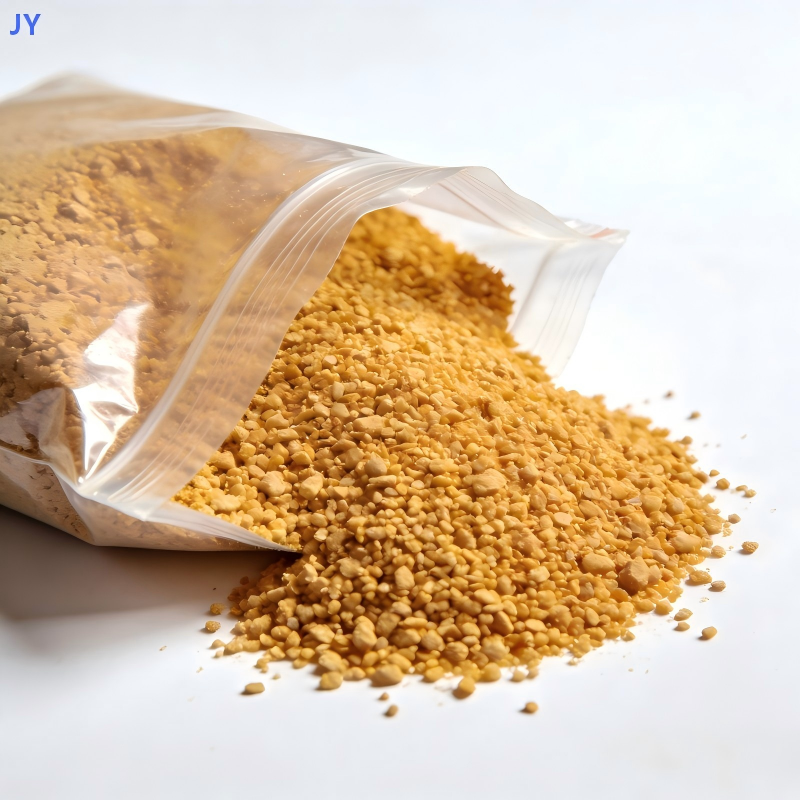
03 The Invisible ChampionAmong the numerous chemicals, Polymeric Aluminum Chloride (PAC) can be called the "invisible champion." As an inorganic polymer flocculant, it has become one of the most widely used flocculants globally due to its excellent performance. PAC's molecular chains carry a large amount of positive charge, enabling efficient neutralization of negatively charged colloidal particles in water. It forms large, dense flocs through bridging adsorption, resulting in very fast settling speeds. Its advantages include a wide applicable pH range (5-9), low sensitivity to water temperature, low corrosiveness, and minimal salt residue in treated water. PAC is found in municipal water supply and drainage purification, industrial wastewater treatment, and even in industries like papermaking and dyeing. 04 Future TrendsFaced with increasingly stringent environmental regulations and sustainable development requirements, the water treatment chemical industry is evolving towards greater efficiency and environmental friendliness. Greening is the clear main theme. Taking scale inhibitors as an example, early phosphorus-containing polymers were effective but prone to causing water eutrophication. Today, "green" scale inhibitors like Polyepoxysuccinic Acid (PESA) and Polyaspartic Acid (PASP) have become hotspots for R&D and market application due to their biodegradability and phosphorus-free, nitrogen-free properties. Compounding and multifunctionality represent another major trend. Scientifically blending chemicals with different functions can produce a synergistic "1+1>2" effect. For instance, corrosion and scale inhibitors combine two functions into one, simplifying the dosing process In the future, developing intelligent chemicals that integrate multiple functions like flocculation, corrosion inhibition, and biocidal activity will be a key direction for technological breakthroughs.
In the laboratory of an environmental technology company, R&D personnel are testing a newly synthesized amber-colored liquid. This is a novel biomass-based flocculant derived from agricultural waste. In the School of Environment and Resources at Fuzhou University, a new edition of the Water Treatment Chemicals Handbook edited by Dean Liu Minghua has just been published, featuring nearly 500 different chemicals. In the dosing room of a municipal wastewater treatment plant, a fully automated control system precisely calculates and doses chemicals in different ratios based on real-time monitoring data of the incoming water quality. In the massive aeration tanks, the turbid wastewater churns and gradually becomes clear. |